Life as a Freelance Developer in Brighton
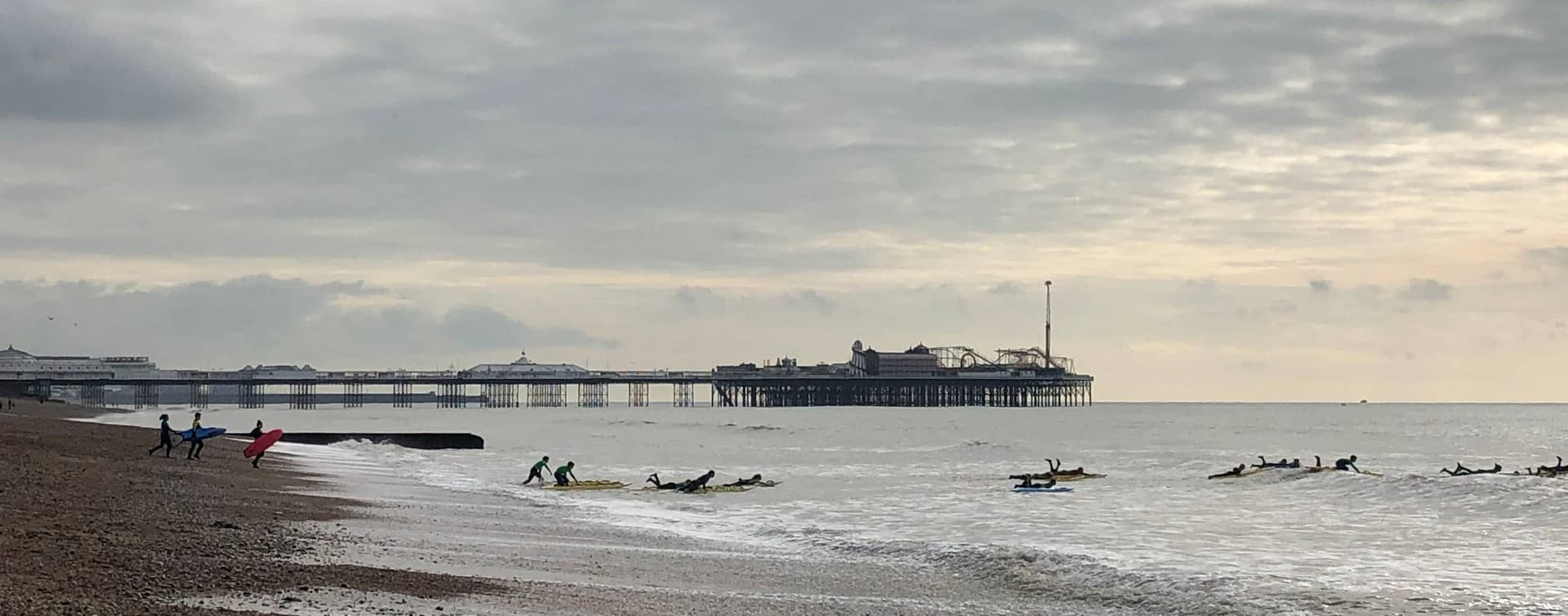
I have a vivid memory from several years ago: I was sitting in the big chair at my then‑new Brighton dentist, trying to make small talk in so much as you actually can whilst they rootle around inside your mouth. Whilst I can't remember the specifics of the conversation, the one thing they said that has stuck with me ever since is (paraphrased):
“The people of Brighton tend to be very transient.
In hindsight, maybe he was talking about the student population who ebb and flow through the city semester‑by‑semester, loading up the local streets with their knackered Micras and discarded nitrous canisters. Given the shock I received alongside my first bill from that dentist, perhaps not...
But, the way that he described Brightonians resonated with me. At the time, my then‑girlfriend (now‑wife) and I had only been in the city for a few months and knew from the outset that we would likely only be staying for two years or thereabouts whilst she completed her masters.
After all, as a couple, we were the very definition of 'transient': we had met in Guildford at university before I moved to Dorking, and she moved to Chichester. After that, we lived together in Oxford (whilst I studied), Manchester (where I grew up), and back to Brighton for her studies. After that, we moved three more times: from Brighton into East London for work, then even deeper into much scruffier East London where we could afford to buy a house, and ‑ finally ‑ back down to Brighton again where we had always promised ourselves we would end up eventually, reciting the familiar 'raise kids by the sea' mantra.
Nowadays, and with (we hope) the worst of Covid behind us, the people I used to work with in London are moving out of the city in their droves, and oftentimes towards the sea. Margate and Ramsgate both seem to be firm favourites at the moment although it is fair to say that there are definitely significantly fewer Sussex accents around us here in Brighton now too.
We just managed to make the move two years earlier, and I often feel obliged to stress when talking with the locals that we aren't 'Down from Londoners' (as though that carries some sort of negative connotation), but rather we are 'Back down from Londoners' because we lived here before. As if that's actually any better.
Brightonians are a Friendly Bunch

Going back to my very first dentist experience in probably a decade (at the time ‑ I've been better since), what struck me ‑ and helped put my odontophobia at ease ‑ was how friendly the experience was. This is true of most people you bump into in Brighton.
Whilst I joke about the 'Down from Londoner' thing (a hot topic in many seaside towns right now), negativity towards a new face is really only a response I've seen an incredibly slim number of times. Certainly, we experienced far stronger 'outsider' feelings when we used to holiday in Deal, where even the man behind the fish and chip counter seemed irate that I had interrupted his evening with my imported accent.
By and large, the people of Brighton are extremely friendly. It probably has a lot to do with just how diverse the population really is. The older hippy‑vibe still lives strong too, which probably also helps. It is fair to say that the daily cram, elbow in the face, and indifference you would receive from other passengers on the London Underground has no equivalent here.
That said, you will have to excuse the leary, sunburnt, topless lads‑lads‑lads and (usually not topless) lass‑lass‑lasses that invade Brighton during the summer ‑ they will be passed out on the beach, bright red and with questionable tattoos on display, before 9 o'clock on any summer's evening.
There is Nothing Quite Like Being by the Sea
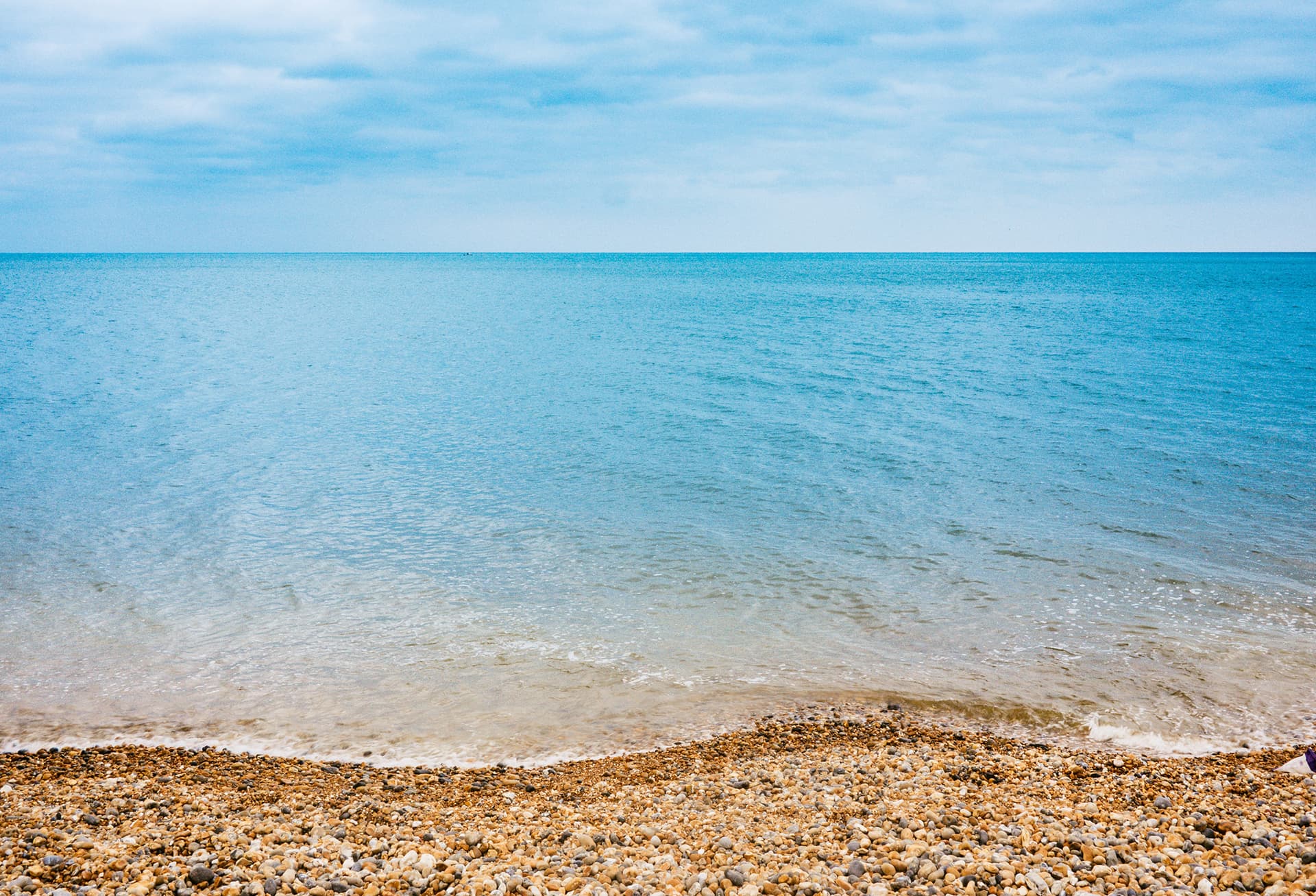
* Yes, that really is Brighton Beach!
I mentioned earlier: my wife and I had promised ourselves when we moved to the deepest, darkest corner of East London, that our escape route would be back to the South Coast if and when we had children. That's because there really is nothing quite like it. The fresh sea air was always a hangover‑slayer in my former days, and now it bolsters my daughter's kite when we walk down for the day.
What I would say, though, is that during the summer, Brighton Beach is not a place I like to spend much time at. The majority of tourists who arrive in Brighton get off the train and walk directly through the town to the beach, and stop. What this means is that if you walk even a few moments either East or West of the city centre, the throngs of people subside, and you can easily find a patch for yourself. During the summer we tend to walk down early (because having a toddler in the house means everybody is awake from 5:30 am anyway) or head for Rottingdean, which has a beautiful beach and is generally much quieter though also a little more old‑worldly.
Living by the sea does come with disadvantages too: the weather can be extreme, and I say that as somebody who grew up in one of the wettest areas of the country. Our house is relatively exposed and extremely old, so when the rain comes (and it really does come), we literally feel it through the walls. Our neighbour had to rebuild the entire rear wall of her house because driving rain would literally pass straight through bricks and mortar, although maybe that's just Victorian build quality for you!
It is F**king Expensive

With all the positives comes a significant negative: it is costly here, and it has gotten worse. You may have heard the suggestion that Brighton is a little like London‑on‑Sea, and whilst I would argue very strongly that it is not (having lived for long periods of time in both), what is relatively equivalent is the cost of living.
When we first came down this way, we rented. It's not a fair comparison, but we moved from a massive, two‑bedroom, top‑floor, city‑centre flat with two parking spaces in Manchester to a tiny, single‑bedroom, poorly‑maintained, very damp, basement‑level flat that cost nearly twice as much. And we had to pay another £120 a month to rent a single parking space ten minutes' walk away.
I feel that just how bad the rental market is down here has its own ‑ well‑earned ‑ notoriety so I won't go into great detail now. Suffice it to say: you are paying a lot to live by the sea, and there are many very poor‑quality rental places priced much higher than they deserve. To offer a more direct comparison: when we moved into London, we moved into a large, two‑bedroom, Zone 2 apartment and paid around £100 more each month than we had done for the constant hum of a dehumidifier and damp patches coming through our bedroom wall in Brighton...
Housing isn't the only expensive thing, though. By the very nature of living in a desirable holiday destination, living costs are high all year round, even when the tourists have long left and the days have drawn in.
Commuting is Expensive and Long
I used to joke when living in London that from our house in Forest Gate, it would take an hour to get anywhere in the city. Coming home from work? I'm an hour away. Drinks in Soho? Be there in an hour!
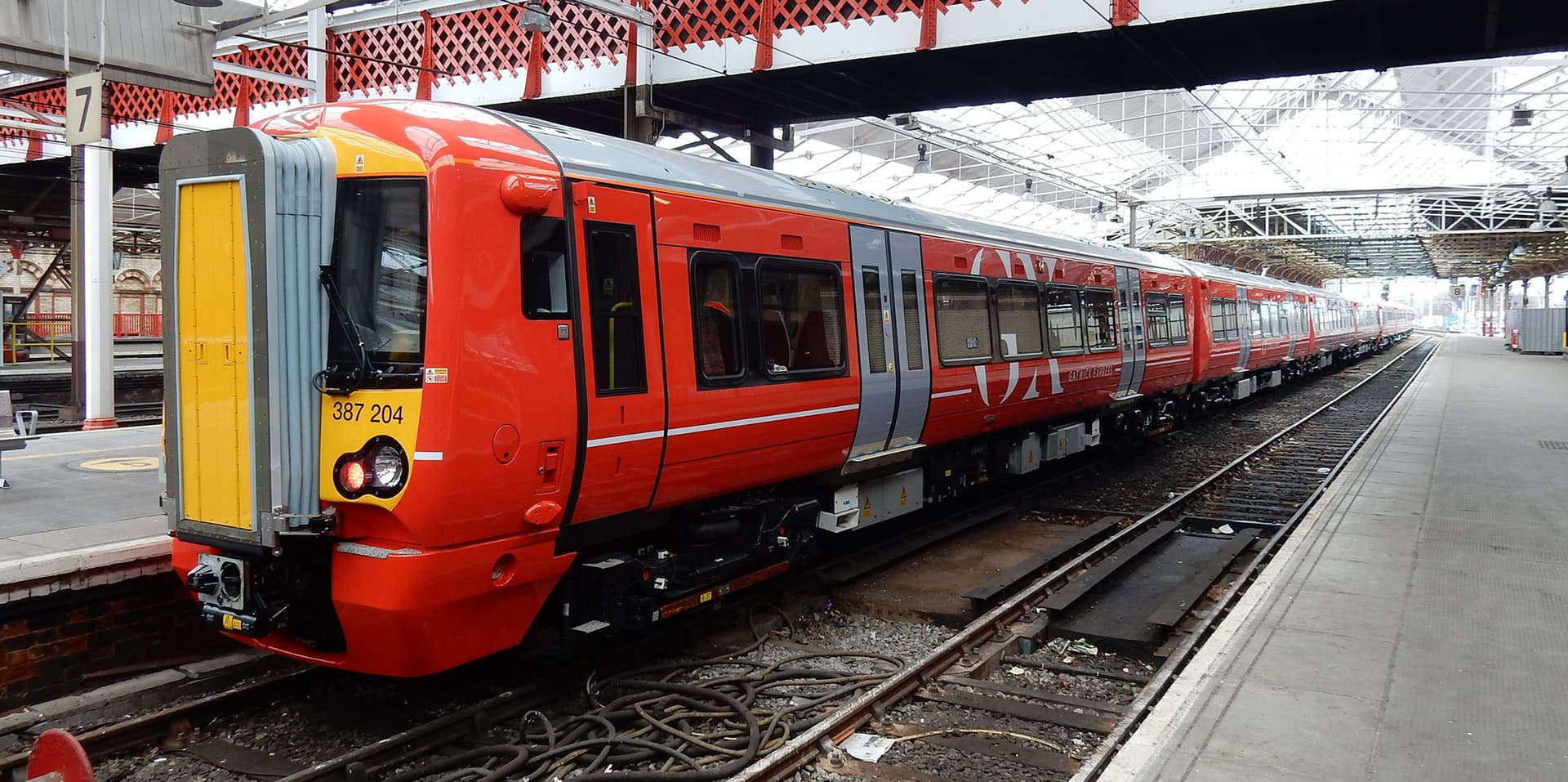
Commute from Brighton into London? At least ninety minutes door‑to‑door, if you use an Uber to get to the station, and you are lucky with the weather (the Gatwick Express is notorious for being cancelled in heavy rain), and only if you want to get as far as Victoria.
If you buy a return on the day, it is going to cost you around £50. If you buy a season pass, it can be significantly cheaper but still around £30 a day. Also, whilst Brighton is a small place, and public transport is generally good, there is the question of actually getting to the station in the first place.
On top of that, the 'hour to anywhere in London' mantra I mentioned above is true here too: unless you work in Victoria (or perhaps London Bridge if you can face crawling through Croydon), you still need to get to wherever it is you're going once you get into the city.
When we first moved here, I worked in Victoria, worked from home twice a week, and managed to land a subsequent contract again in Victoria, one building over. I worked in the office from 8 am to 4:30 pm. This meant leaving the house in Brighton at 6 am to catch the 6:15 bus down to the station and arriving home (again: if I paid for an Uber), just in time to put my daughter to bed at 6:45 pm.
It was rare that I couldn't find a seat on the train because I deliberately travelled just outside of the hectic periods. During the summer though, the train would fill to bursting by the time it arrived at Gatwick, and during the winter, the trains would be delayed or cancelled more often than they ran to time because of the rain. Sometimes sitting on the train with noise‑cancelling headphones on was lovely, but it still ate a huge chunk of the day.
This is perhaps all less relevant now that the way we work is changing, but I often see people talk about living in Brighton and commuting to London. From the number of familiar faces I saw each day on the train, I am sure that there are hundreds of people doing just that. I eventually accepted a role much closer to home in Worthing, at £150 less per day, but only a twenty‑minute drive in the morning. That didn't work out because shortly afterwards, the entire world closed down, but I had at that point been actively looking for more local work for more than a year, which takes me onto my final point...
The Work Just isn't Here

* Yes, that really is Brighton Beach ‑ again!
Here is the sad truth about Brighton: it is an amazing place to live and bring up a family. However, in my experience, the job market is utter rubbish. I am too kind there; considering the expense and compromise of living in Brighton, the rates available in local agencies are utterly abysmal. This isn't a market that supports anywhere near London levels of rate, whilst living rates are comparable. I even ended up taking a significant drop in day rate when we first moved down this way from Manchester ‑ where living was half the cost.
In the media, Brighton is often heralded as some sort of digital hub. Realistically if you went looking for this digital insight here, what you will find is a pub back room with three older people standing in front of a (small) crowd talking about last year's SEO practices. I have gleaned better, more up‑to‑date information about tech from a random guy who drunkenly challenged me to a game of table football than from most of Brighton's 'tech' meet‑ups.
In Brighton, you will find more agencies announcing their slow, buggy, template‑driven WordPress sites as the next big thing than anywhere else in the country. Never mind the 'SEO agency' who will take your buggy, slow WordPress site and make it demonstrably worse by installing a poorly configured version of Yoast onto it.
Contract and freelance jobs are very scarce, anything paying anywhere near the rates you might expect elsewhere in the country are scarcer still and very aggressively fought over. There is a reason many tech people who live in Brighton have made a career of commuting into London; you exchange those long commutes for easily double the take‑home earnings.
I realise I sound particularly unfair about this point, but allow me to offer some numbers. The figures I recorded from IT Jobs Watch cover the six months leading up to July 2021. They are a snapshot of advertised roles and rates at the time I wrote this, rather than a guide to what the market will offer in future:
- In Brighton, the average offered rate of a Front End Developer over the past six months was £280 per day. There were a total of five job adverts posted during that time.
- In London, that same role commanded an average rate of £475 per day, with a total of 401 adverts posted.
- In Manchester (where, let's remember, living is a fraction of the price, and it is an amazing city), that same role commanded £403 with 71 jobs advertised.
For some perspective: I eventually negotiated £400 per day for that role in Worthing I mentioned earlier, where Covid so rudely interrupted things. The internal recruiter who hired me was very clear that I was not to discuss that rate with the rest of the team, as I was earning more than they had ever paid for a contractor before.
Things look no sunnier in the permanent roles advertised over that same six‑month period leading up to July 2021:
- Brighton: £40,000 / 62 jobs in the past six months.
- London: £65,000 / 1,258 jobs posted.
- Manchester: £54,000 / 247 jobs posted.
The good news is that there is a thriving market for independent freelancers: many smaller businesses, who need to get themselves online. On that side, the bad news is that many of them have been conditioned by those "WordPress is great" agencies and expect to pay you in cupcakes and hugs.
Wrapping Up
Perhaps in a post‑Covid world, some of the things I talk about here aren't nearly as relevant as they once were. I've been working on longer‑term contracts from home for over a year now and have absolutely no inclination to get on a train or walk into an office again. So perhaps the tiny, stagnant, underpaid job market and long and expensive commutes into London don't matter as much now as they once did.
I love Brighton. We intend to live here for a very long time. Even though we have now been 'back from London' here for two years, I still haven't yet taken up surfing or swum around the pier, or embraced a vegan lifestyle, but I do enjoy looking out my window at the sea from my desk each day, and I eat an awful lot more sourdough than I used to...!