Lotus
Cars
Long‑running front‑end development for Lotus Cars across legacy web platforms, vehicle configurators, model pages, pre‑owned sales tools, and launch marketing.

In Detail
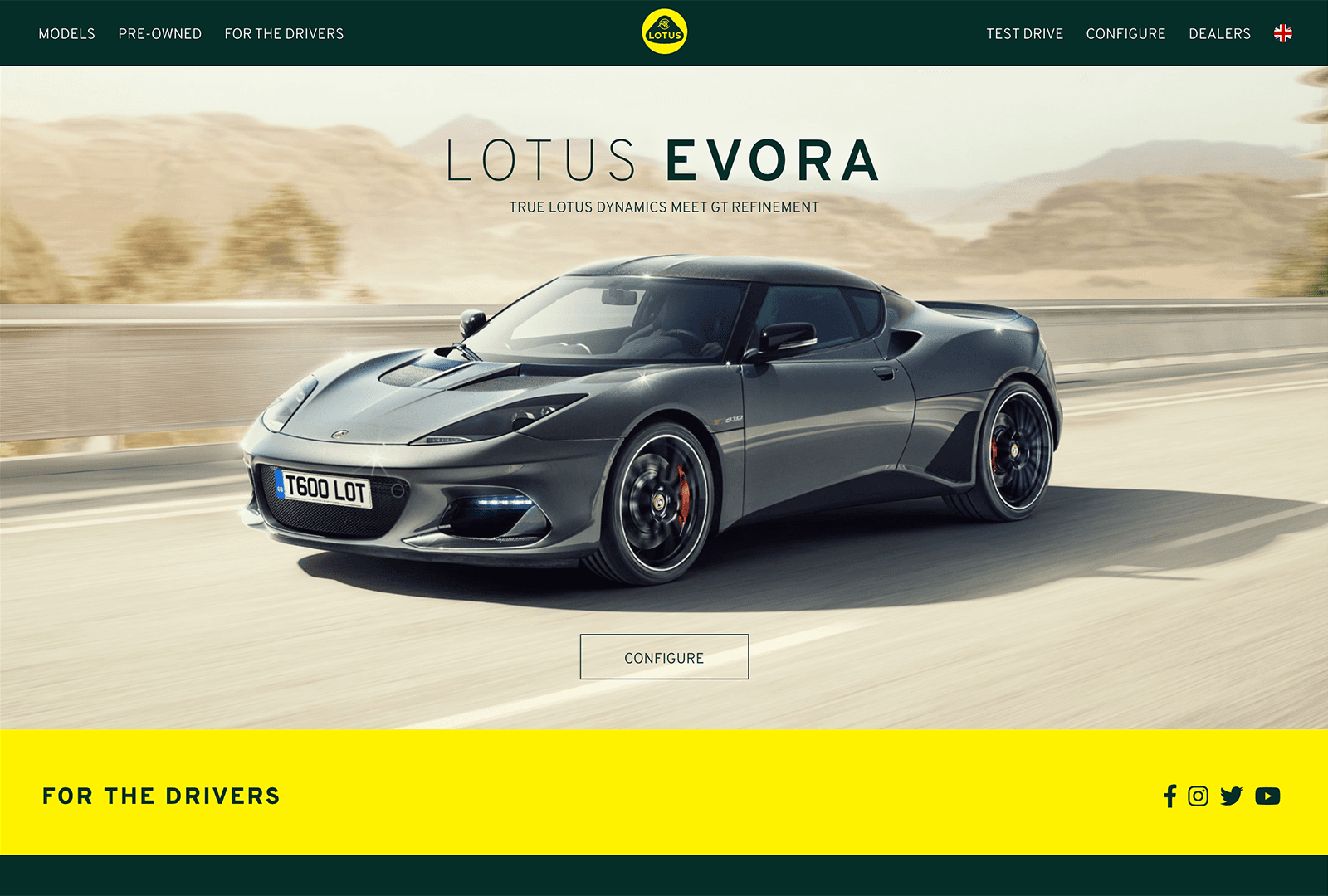
My involvement in the development, maintenance, and evolution of the Lotus website began around the 2008 relaunch for the Evora and continued through later model launches, including the 2020 launch of the Evija, which placed far greater emphasis on online marketing, rich media, and launch activity.
In 2008, as the junior and only UI developer in a small team, I helped launch an all‑new Lotus website. It was built with CodeIgniter, PHP, XSLT, and a Flash/Prototype.js‑enhanced front end, including a 3D vehicle configurator and a tool that connected visitors with their local dealership using the details of their chosen car.
The platform has evolved substantially over the years. A later WordPress‑based version moved away from the technologies of the original site, using HTML5, SCSS, JavaScript, and progressive enhancement alongside responsive design to support a much broader range of model pages, launch campaigns, configurators, editorial content, and customer journeys. Animation and rich media also became increasingly important as the website developed into a more substantial marketing platform for the brand.
The original 3D configurator was eventually replaced by an image‑led configurator built around rendered vehicle variants. As visitors choose paint, interior, and option combinations, the interface switches between rendered images to show the selected configuration, which can then be carried through to a dealership enquiry.
As Lotus grew internationally, the website also had to support an increasingly global audience and greater localisation. The platform now receives around 200,000 visitors a month, many from outside the UK, and hosts content in over thirty languages.
Model Overview
Each vehicle page gives as much space as possible to imagery, key figures, and model detail. Visitors can move from high‑level overview into galleries, specifications, finance information, dealership routes, or the vehicle configurator.

Vehicle Configurator
The configurator is central to the automotive purchase journey, giving customers a way to explore the different options available and see how their chosen vehicle will look. Subtle animation and responsive layout behaviour help the experience feel immersive across desktop and smaller screens.
The configurator uses a back‑end image‑generation process that renders vehicle imagery from 3D model data as options are selected, then caches generated images when the same configuration is requested again.


All‑Electric British Hypercar
WordPress gives Lotus control over model and launch content through a library of flexible components and layouts. For the Evija, those components supported richer storytelling around the all‑electric hypercar, including animation, video, and engineering‑led visual content such as the aerodynamics sequence.


Pre‑Owned Car Sales
The Pre‑Owned section helps visitors find used Lotus models, with filtering by model, trim, location, and other criteria. It connects to dealership stock systems and updates automatically as vehicles become available or are sold.


Dealership Finder
The dealership finder helps visitors locate specialist Lotus retailers through postcode search or browser geolocation. It follows the same image‑led pattern as the wider site whilst supporting a practical sales journey from exploration to local dealer contact.


The Outcome
My work with Lotus spanned more than a decade of the company's digital evolution, from the original Evora‑era website through to later platforms, model launches, configurators, and the launch of the Evija. Over that time, the website grew into an increasingly international platform, supporting more than thirty languages and around 200,000 visitors a month.
- "
John Kavanagh's knowledge of front‑end technologies and of the pitfalls of the user journey make him a great resource to have around. Using John's JavaScript, CSS, HTML5 skills (amongst many others) allowed us to develop great, interactive sites and applications with the creative flair that appeals to our clients and keeps them happy! He always managed to keep us informed of the latest technology shifts as well as new ways of reusing old technologies to the best effect."
- "
John Kavanagh is a talented front‑end developer and was also a very fast learner. No matter what was thrown at John he always delivered in a timely manner and with a professional attitude. He is easy to work with and an inspirational person to be around."
- "
John Kavanagh is a talented front‑end developer who was equal to any challenge put before him. Quick and willing to learn, always puts in the extra effort to make something look that little bit better and a good all round guy. Recommended!"