Microsoft Edge
DevTools
A Microsoft Edge engagement focused on AI‑driven in‑browser features, including real‑time content simplification, alongside integrated developer tooling and structured feedback systems.
In Detail
This engagement formed part of Microsoft's "Web We Want" initiative, in collaboration with the World Wide Web Foundation and W3C‑aligned stakeholders, focused on strengthening the relationship between developers and browser vendors.
Working closely with external stakeholders and industry leaders, I helped identify and prioritise opportunities for exploration within the browser, shaping a roadmap of experiments and MVPs to improve both developer feedback loops and the wider browsing experience.
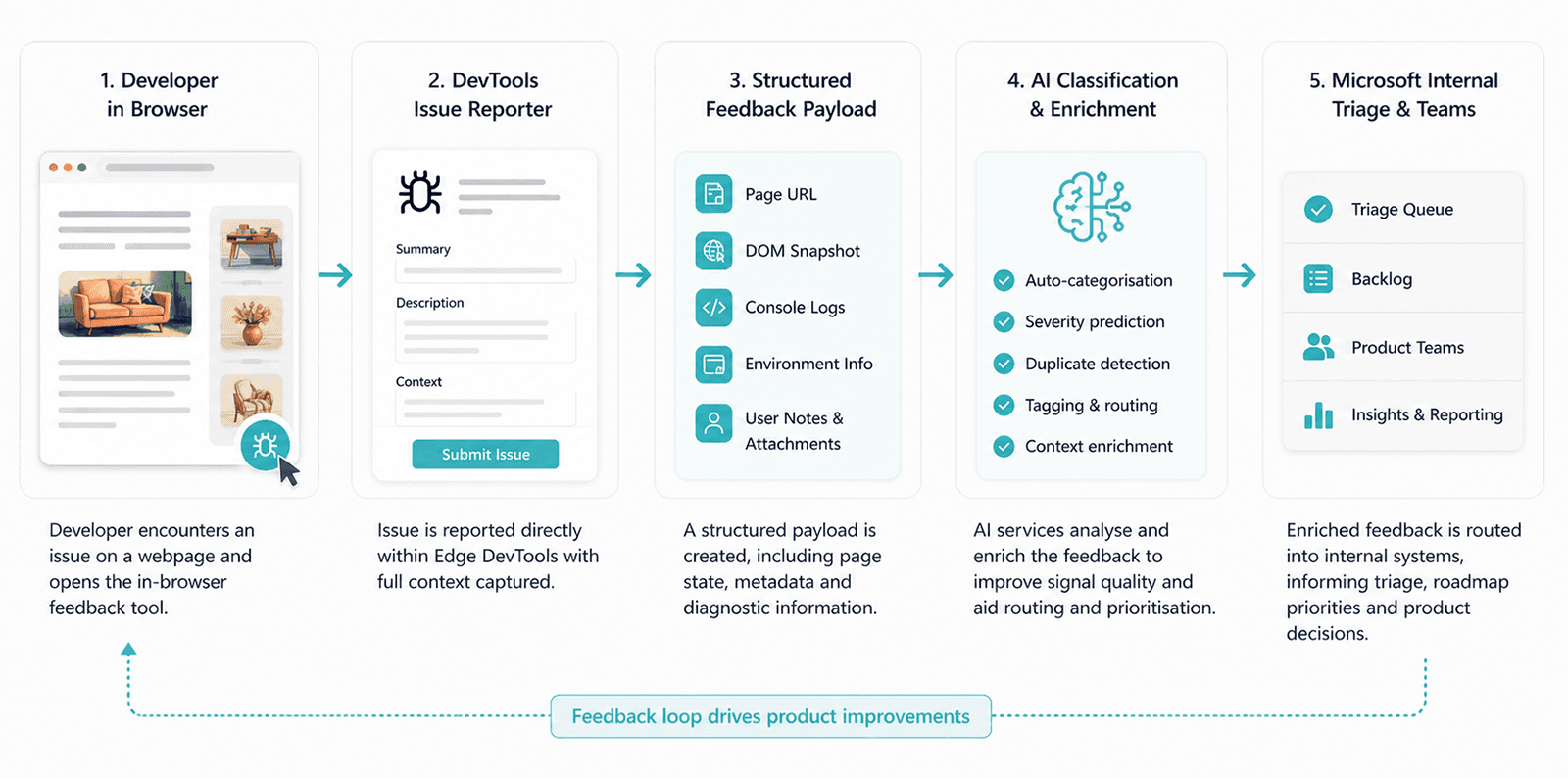
To support that work, I assembled and led a small external engineering team responsible for turning selected ideas into practical demonstrations and early‑stage implementations. My own hands‑on focus was on the developer tooling strand, where I helped define and deliver in‑browser tooling integrated with Microsoft Edge DevTools, enabling developers to capture and submit structured feedback directly within their workflow.
This reduced friction, preserved context, and created a more scalable and actionable pipeline for surfacing real‑world issues and feature requests to internal Microsoft teams.
In a subsequent engagement at Microsoft's Redmond campus three years later, I returned to work further with stakeholders and to help drive experimentation into AI applications within the browser runtime. A key prototype explored real‑time analysis of web pages, intelligently identifying and removing distracting or non‑essential elements to improve clarity, focus, and usability without requiring changes from site authors.
Together, these engagements formed part of a broader programme of exploratory work within Microsoft Edge, investigating how the browser could better support both developers and end users, and preceding wider industry movement towards AI‑assisted browsing experiences.
AI‑Assisted Content Simplification
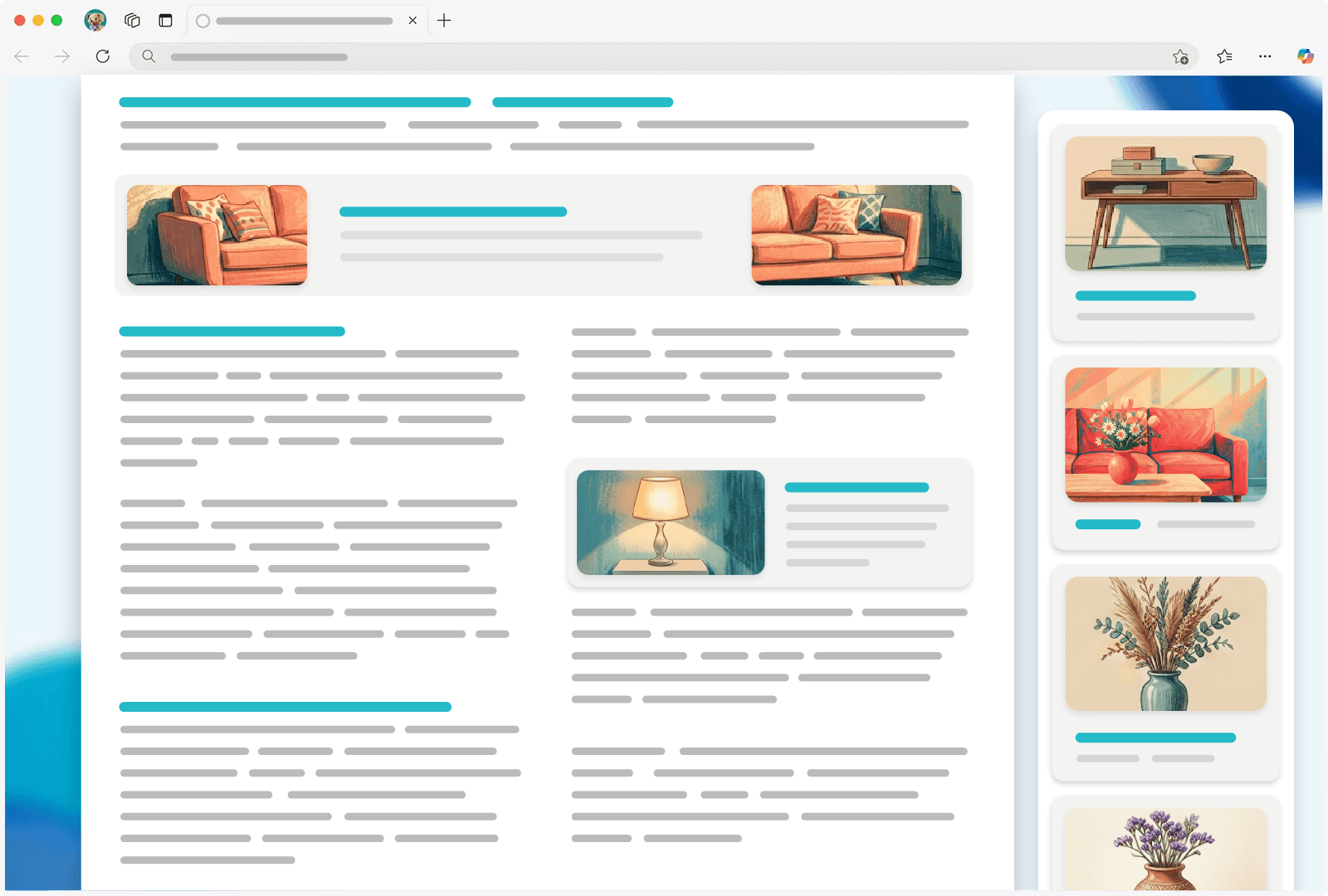
A prototype exploring how AI could operate directly and autonomously within the browser to improve clarity and focus by interpreting and restructuring live web pages in real time.
The system analysed page structure and content to identify non‑essential or distracting elements, including adverts, overlays, and visual noise, and removed or suppressed them without requiring any changes from the site itself. This resulted in a cleaner, more readable experience, demonstrating how intelligent systems could augment the browsing experience at runtime rather than relying on upstream optimisation.
In‑Browser Developer Tooling
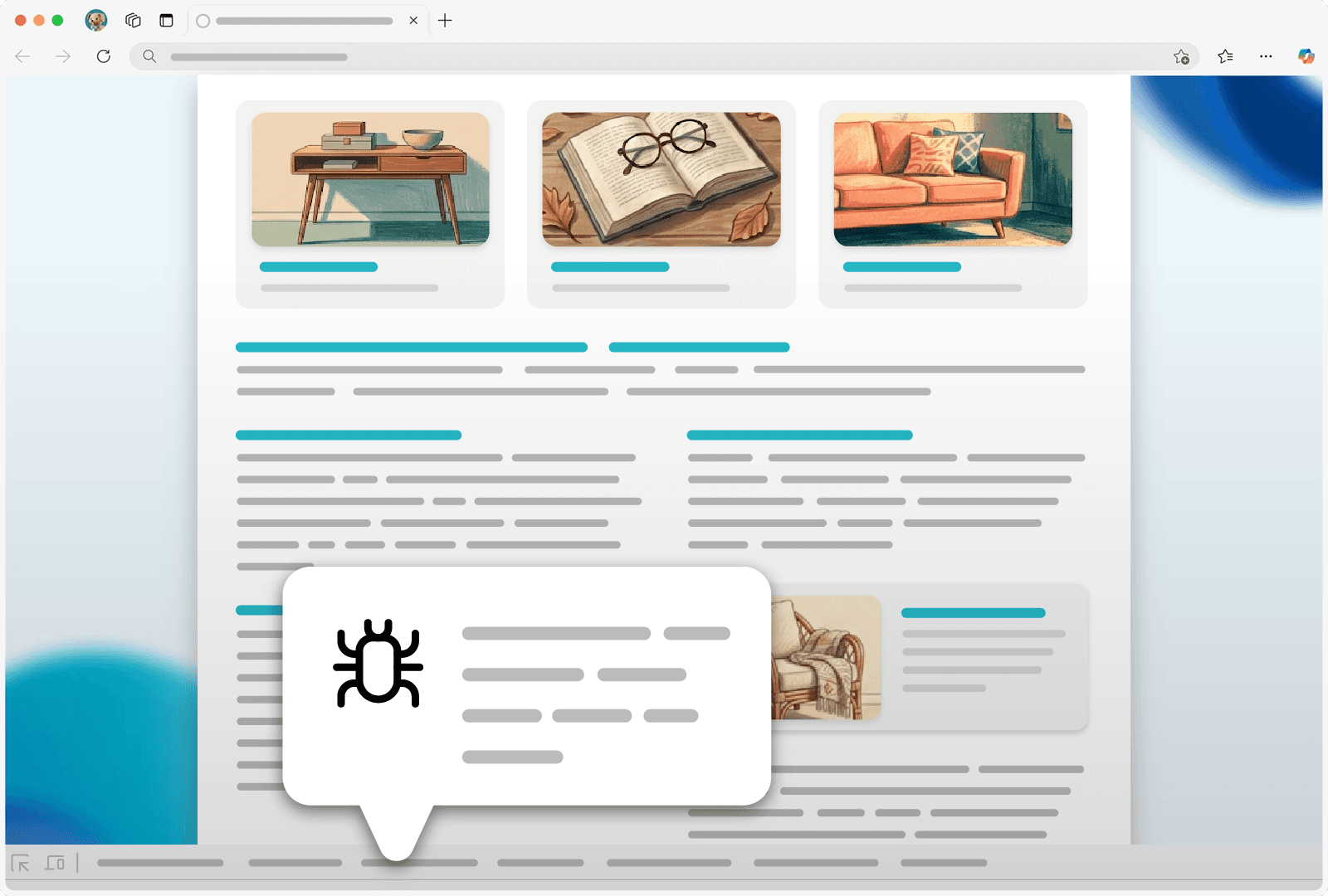
A set of in‑browser tools my team and I developed within Microsoft Edge DevTools to create a direct and structured feedback channel between developers and browser teams. Rather than relying on external issue trackers or fragmented reporting mechanisms, this approach embedded feedback capture directly into the developer workflow.
The tooling enabled developers to raise issues in context, preserving relevant page state and reducing friction in reporting. AI‑assisted analysis was used to help classify and enrich submissions, improving signal quality and making feedback more actionable at scale. This improved both the quality and volume of feedback, forming part of a broader effort to treat developer input as a first‑class signal within the browser platform.
Developer Feedback Pipeline
My team and I developed a structured feedback pipeline connecting in‑browser developer tooling to internal Microsoft systems, transforming ad hoc reports into actionable product signals. Issues raised within DevTools were captured with contextual metadata, enriched through automated classification, and routed into triage workflows, helping browser teams prioritise real‑world problems with greater speed and accuracy.