Ethical Web Development I: Privacy, Consent, and Security

It is fair to say that the web has been encroaching into everybody's lives for several years now, and continues to encroach just a little more every single day. As this infiltration into our daily lives continues, attitudes towards development, web apps, and websites from users ‑ as well as from within the development community ‑ are changing.
Whilst a lot of attitudes (and style choices ‑ thank goodness for the end of marquee!) are changing for the better, there are a few more insidious ideas and practices that are becoming more commonplace as everyone has more complete digital profiles and spends greater portions of their lives 'logged on'.
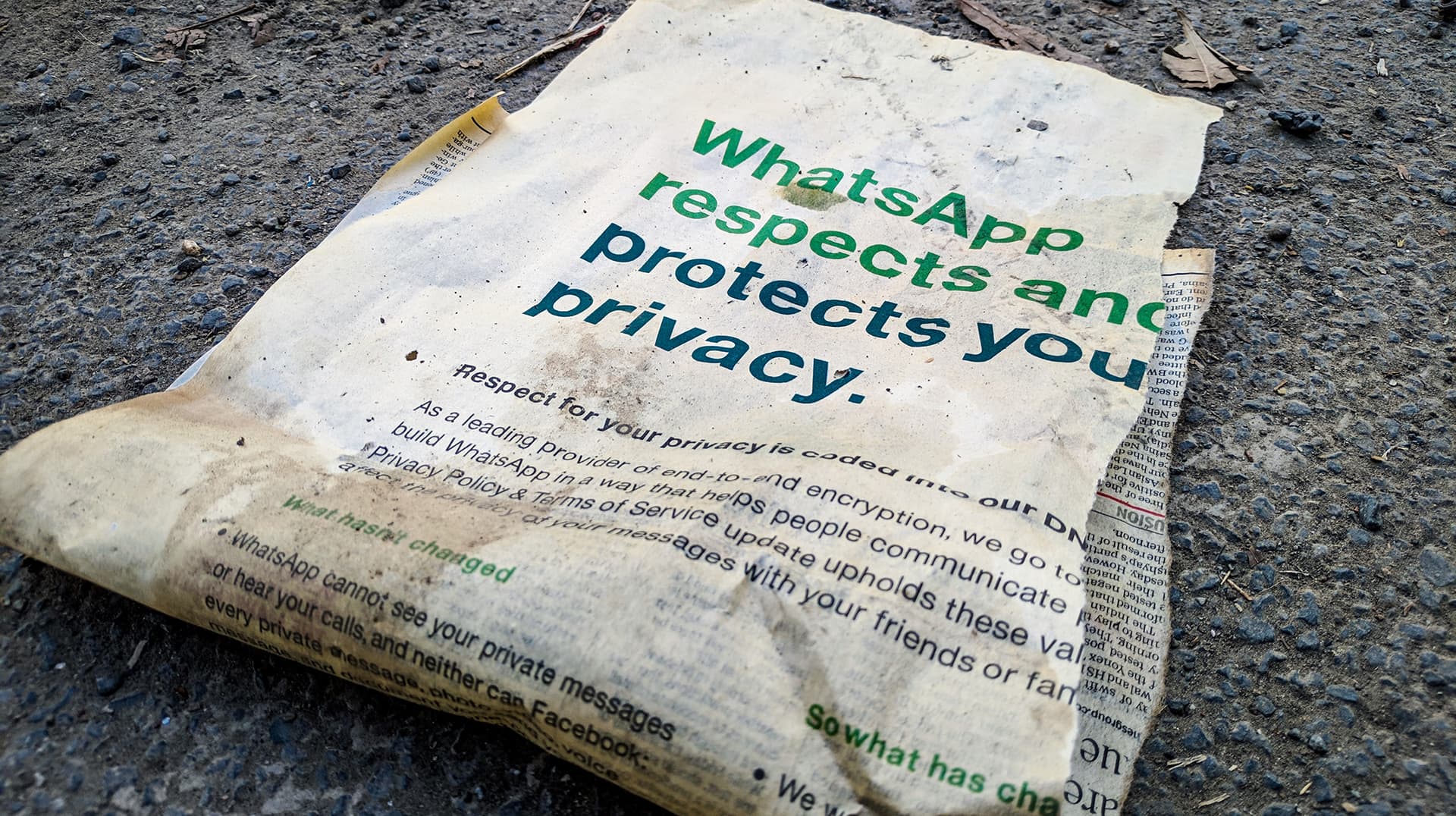
Of Particular Concern is Privacy
The Cambridge Analytica revelations in March 2018 brought a particularly troubling example to wider attention: Facebook data belonging to tens of millions of people had been collected through an app and passed on without their knowledge. The date matters here: 2016 was the US election year, rather than the year those revelations broke.
The ICO's investigation documented serious problems with personal data in political campaigning. Profiling and targeting voters is not the same as proving that particular messages changed their votes. For me, the ethical problem is already clear enough: people lost control over information about themselves, and that information was used for purposes they had not understood or agreed to.
Do you have Siri or Alexa in your home, phone, car, or Bluetooth earbuds? If so, do you know when it's listening and what it's listening for? You don't even need to have a smart assistant for this kind of thing to happen to you, though, because it's not just the big companies that are in the market for your personal data.
When it comes to web development, especially when developing something like an online store, there's money in data. Being able to grab customer information means that you can show them relevant advertising, use retargeting more effectively, track and trace your marketing efforts, and open them up to direct marketing via their inbox ‑ if you manage to get their email address.
I'm sure we've all seen the popups that tout a small (five to ten percent) discount in exchange for unlimited access to your inbox or checkouts that pre‑tick the "Yes, sign me up!" box. Web developers should be questioning themselves when developing these, and sometimes, it's more important to develop for the customer than for the client.
A pre‑ticked box is not valid consent under the GDPR standard. The GDPR covers personal‑data processing much more broadly than internet users or marketing, and UK email marketing also has to meet PECR. For individual subscribers, that normally means consent or a qualifying soft opt‑in: details collected during a sale or negotiations, marketing your own similar products or services, and an opt‑out when details are collected and in every message. A discount does not automatically invalidate consent, but people still need a genuine choice: don't disguise the marketing agreement or make refusing it unfairly costly.
Don't Be Clingy
Another big part of the GDPR is that withdrawal of that consent should be as easy as giving that consent was. In real terms for developers, this concerns your unsubscribe functionality, and how you handle people deleting their accounts with you ‑ if you even allow them to be deleted. There are some stunning examples of awful user experience out there when it comes to getting away from a website ‑ things like the Shaw Academy, which has a cancellation process that feels more like a breakup with a particularly clingy partner rather than a simple "delete my account" function.
The problems start as soon as you begin the process, with a convoluted, multiple‑screen interrogation (which, for added frustration, switch the positions of the "Yes, proceed" and "No, take me back" buttons seemingly at random), leading to a screen that simply asks you to call them to cancel anyway. You call, and are told to call back within business hours, so ‑ with the clock ticking until your next membership payment ‑ you wait until tomorrow and give them a call.
This is where the sales pitch begins, and after you finally get this sorted and your account "deactivated", you go through a grace period during which you get texts and emails asking you to come back. If you're a developer or a business owner, this is unethical development, and frankly, it's embarrassing.
There is Hope
Companies and foundations like Mozilla have been active and vocal about your privacy for years. They advocate transparency, honesty, and an ethical approach to the web, from both developers and their employers. Mozilla has also developed the "privacy not included" buyer's guide, in an effort to arm customers with the ability to make informed decisions ahead of time when it comes to their privacy. There are some products on here that might surprise you ‑ including a "smart" Wi‑Fi coffee machine that might not allow users to delete the data it collects on them.
In addition to Mozilla's great work, Tim Berners‑Lee ‑ the man credited with inventing the web ‑ has also successfully petitioned Google and Facebook to commit to a set of ethical principles.
Developers and the Customer
To develop ethically, you should be thinking about your customers or your users. Are there any tricks that you're being asked to implement that could be considered manipulative? Things like the "30 people just bought this item" pop‑up that has become synonymous with fake Facebook sales websites, or "ONLY X OF THIS ITEM REMAINING" in blinking red text, or the "somebody just bought this in your area" messages that show up. These are all highly manipulative, intended to put the potential buyer under pressure to hit the 'buy' button and could (and probably should) be considered unethical.
In an ideal world, you need to be developing things that you really believe in ‑ both to enjoy your job and to be making the internet a better place. It's not always easy or possible ‑ everyone needs to earn money ‑ but ethical development benefits everyone.

Are You Developing Securely?
An important piece in the process of ethical web development is making sure that anything you develop (especially when it handles or stores personal information) is securely built. There's a pretty good principle that you should generally stick to when dealing with forms or any kind of user input: you should assume that anything a user could enter into your site is malicious.
This goes for file uploads, text fields, number fields ‑ anything at all that allows a user to send information or files to your server (or the shared server you host on). Most of the big CMS platforms (WordPress, for instance), have provisions already in place deep in the architecture to help protect against things like XSS (Cross‑Site Scripting) attacks, SQL injection, or malicious file uploads, but if you're building a bespoke plugin ‑ or adding a piece of functionality with code you're finding online or writing yourself ‑ you might be unintentionally opening security holes in that pre‑existing architecture.
Of course, if you're building a meatier piece of functionality (like a whole app, or a custom CMS), you're potentially going to be responsible for the key parts of the entire architecture yourself. In this situation, you definitely need to keep your wits about you whilst you're building and make sure everything is tightened up.
The risks of building an insecure application or website are pretty big. You could lose user data (or go through a personal data breach), which would damage not only your reputation but potentially even your wallet if it's serious enough. You could end up with a spoofed site, spreading viruses or malware to your users, and missing out on sales or legitimate traffic. You could even potentially open your server up to further hacking and damage, which would be especially bad if you're hosted on a shared server solution because bad actors could leverage their access to your site to access other sites on that server.
Stay Up‑to‑Date
It's not just building new functionality that opens you up to vulnerabilities, though. If you're working with WordPress or any of the countless other options out there, you have a responsibility as a developer or an agency to ensure that your clients' sites are kept up‑to‑date with the latest security patches. You also need to keep any plugins that you're using updated and at their latest versions.
This is also true of dependencies you've brought into your project through npm or Yarn. Check for updates and use an auditing tool such as yarn audit or npm audit, then review the findings and test the changes before deploying them.
This is a topic I've been working on putting into a written article for quite some time, and there is still much more I would like to say! It has become so big and convoluted that I've eventually had to split it into two sections.
In the next instalment, we will discuss what your responsibilities (both legally and morally) are as a developer to ensure your product is inclusive to every user, everywhere, and why that's so important. I also hope to talk about how you can keep the internet open, free, and encourage a better developer community.
You can follow the discussion in Ethical Web Development II: Accessibility and Inclusivity.