LEGO
Senior developer creating a new e‑commerce platform with React for LEGO. Designed to handle high traffic volumes and support multi‑language, multi‑currency functionalities.
In Detail
LEGO was named 'Product of the Century' by Fortune Magazine twenty‑seven years ago, whilst its owner, Kjeld Kirk Kristiansen, was inducted into the U.S. Toy Industry Hall of Fame in 2008. It isn't a stretch to say that LEGO is one of the most popular toy brands in the world (and a personal favourite for my daughters and me). The brick design has remained virtually unchanged since 1958, underlining the brand's commitment to quality whilst remaining able to adapt and transform over time to broaden market appeal.
The brand's evolution into the 21st century showed a pronounced shift towards engaging with its users directly, through its own LEGO Stores and direct‑to‑consumer website, as well as online games, challenges, and other digital innovations.
This shift in focus drove LEGO's digital overhaul from 2011, as its digital platforms needed to remain competitive and accessible to a growing user base, many of whom were increasingly accessing the web on mobile phones and tablets.
A key component of this initiative was to launch an all‑new, responsive e‑commerce platform that addressed the needs of a changing consumer landscape and was capable of handling high traffic volumes and internationalisation via multiple languages and currencies.
During my time as a senior front end developer on the project, I contributed to the React‑based platform that powered the new e‑commerce experience. The work focused on responsive pages across mobile, tablet, and desktop whilst aligning with LEGO's parallel rebranding efforts.
The React e‑commerce work sat alongside more content‑oriented AEM pages, online experiences, user accounts, games, and microsites that had become a staple of LEGO's online offering.
Within the first year of launch, LEGO saw significant increases in user engagement and online sales. The platform went on to support LEGO's growing direct‑to‑consumer business and its international audience.
Bright, Engaging, and Playful
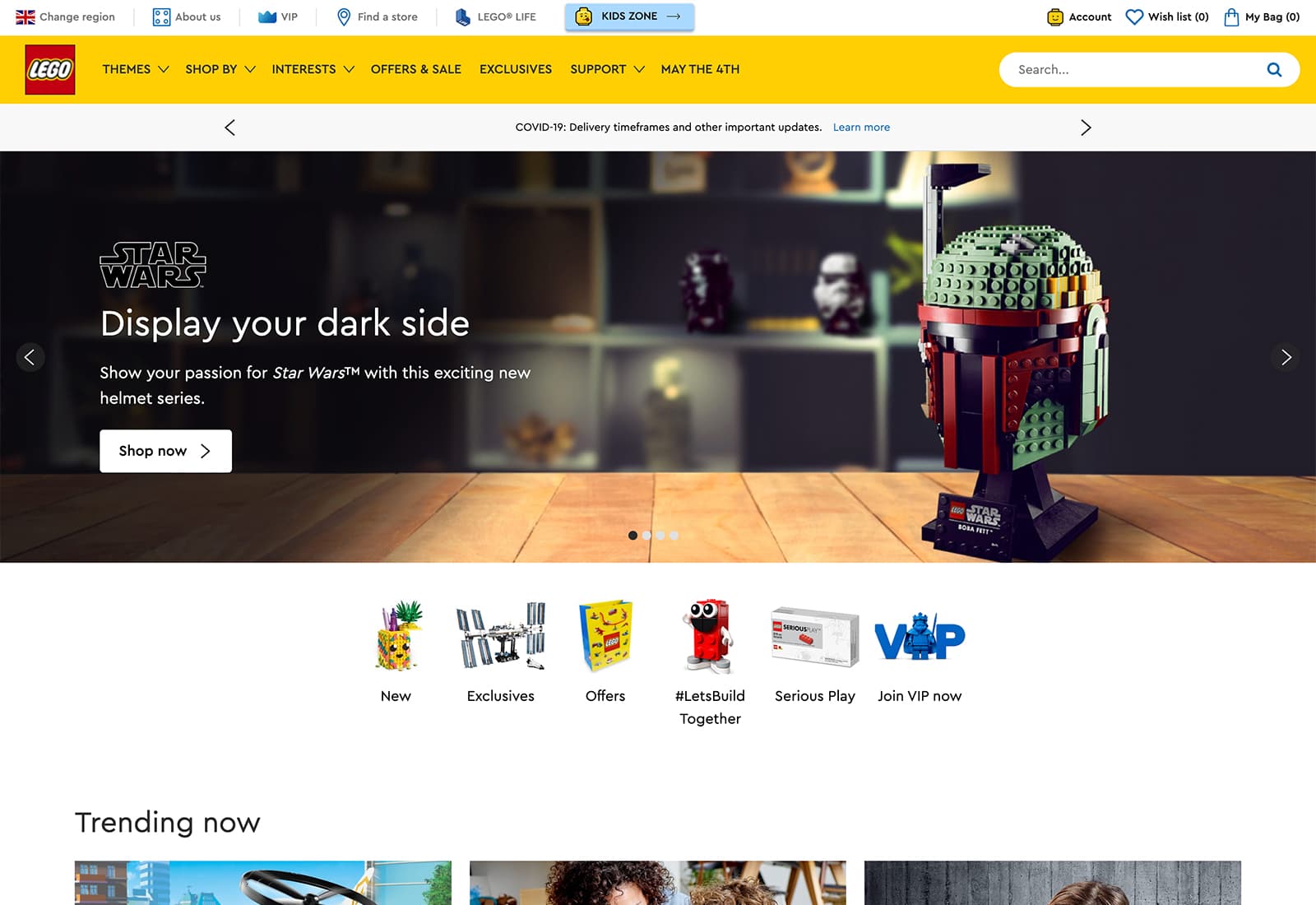
The entire website is made up of multiple different applications, all using a shared, playful, and engaging aesthetic. E‑commerce and promotions are intertwined with more content‑driven areas and marketing.
Product Listing and Filtering
As with any e‑commerce application, one of the biggest challenges is helping users find what they are looking for as efficiently as possible. This becomes particularly complex on smaller devices, where screen real estate is at a premium despite mobile being the most common way visitors access the site.
On the LEGO website, the PLPs feature detailed product photography and specifications alongside comprehensive filtering options that allow users to narrow the results to their individual requirements, from themes and prices to recommended ages and even the number of bricks in a given set.


Product Details Page
The PDP on the LEGO website has been carefully designed and optimised to provide users with the information they need about a product quickly and in an easy‑to‑digest format.
In what has become a very familiar format across the e‑commerce projects I have worked on, this means a large carousel of product imagery showing each model in great detail, alongside key product specifications and descriptions. The challenge ‑ as always ‑ is compressing this into an accessible format on smaller‑screened devices.


The Outcome
My time with LEGO formed a relatively short part of a much larger digital transformation, but contributed to the new React‑based e‑commerce platform at a critical stage in its development. The resulting experience brought LEGO's online store into line with its wider digital rebrand, whilst supporting responsive commerce across devices, languages, and currencies.
The platform provided a stronger foundation for LEGO's growing direct‑to‑consumer business, with significant increases in user engagement and online sales reported within its first year.
- "
I had the pleasure of working alongside John Kavanagh on a project focusing around building static webpages for a client, as well as improving their current webpages. John was an absolute pleasure to work with, he knows how to benefit the project and is able to get his point across without being offensive, this really helped him share his vast knowledge of JavaScript, Gatsby and Contentful.
I can see John fitting into most environments as he has a great sense of humour, can read the room and has very advanced soft skills."
- "
I have worked with John Kavanagh at John Lewis on a team responsible for the most demanding pages on the website. John is a very skilled UI developer, very proactive, pragmatic and a fast thinking guy.
He has always a very strong and valid opinion; I look at him as 'the guy who delivers the job': is always available and always has a valid working solution to share."
